

Clinical Educational Overview
The information provided in this article is for general educational purposes and should not replace an individualised, face-to-face consultation with a registered medical practitioner. Under Australian Health Practitioner Regulation Agency (AHPRA) guidelines, a formal referral from a General Practitioner (GP) is mandatory prior to booking an initial consultation for any cosmetic surgical procedure. A mandatory cooling-off period of at least seven days must also elapse following your consultation before any procedure can be scheduled.
Over the past two decades, the public conversation surrounding surgical fat reduction has undergone a significant transformation. Historically, targeted fat removal was often misunderstood as a quick alternative to healthy eating or structured exercise. Modern clinical education, however, has redefined these procedures as precise methods of structural body contouring rather than weight management solutions.
Today, well-informed patients approach surgical options with a clearer understanding of human anatomy. When researching accredited medical clinics offering liposuction Gold Coast services, patients learn that modern surgical approaches prioritise precise anatomical reshaping rather than scale weight reduction. Deciding whether a contouring procedure aligns with your personal health journey requires evaluating your physical goals, understanding regulatory safety frameworks, and maintaining realistic expectations regarding recovery.
Shifting from Weight Loss to Anatomical Body Contouring
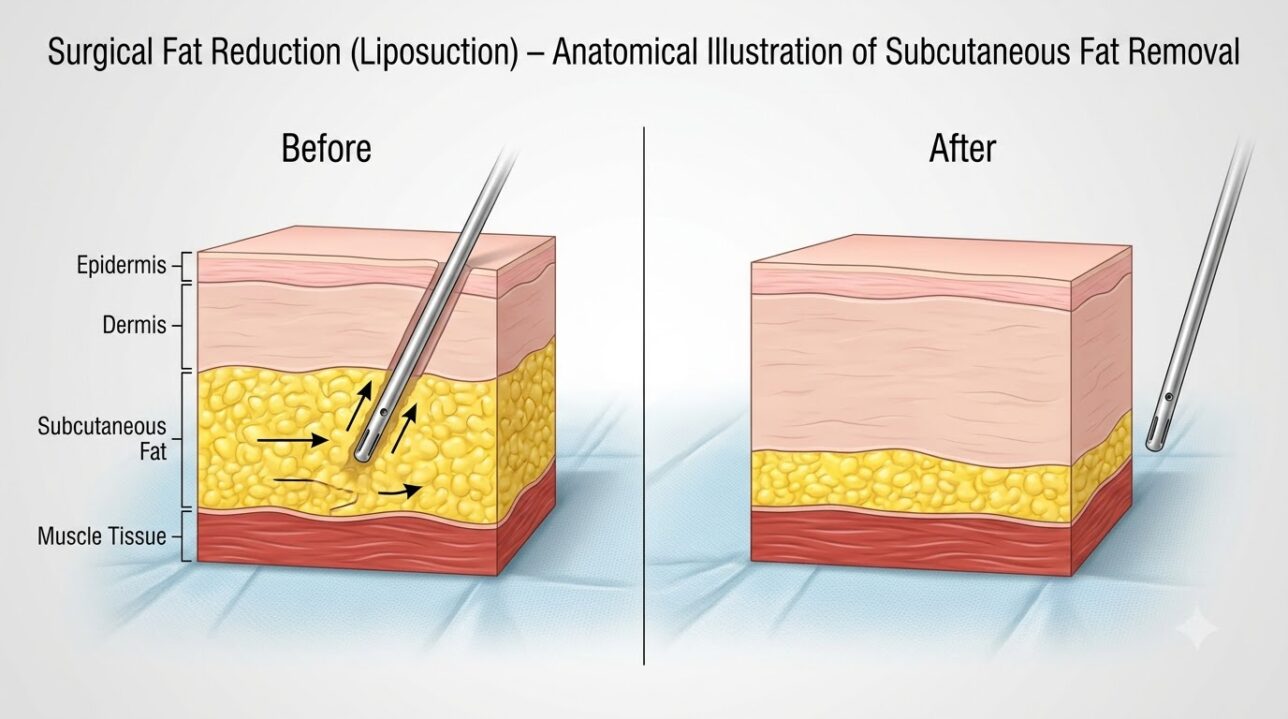
The human body stores two distinct types of fat: visceral fat, which surrounds internal organs, and subcutaneous fat, which sits directly beneath the skin layers. Subcutaneous fat deposits are largely influenced by genetic factors, hormone levels, and structural anatomy. Even individuals who maintain a stable weight through rigorous exercise and balanced nutrition frequently retain stubborn localized fat deposits that resist diet and physical conditioning.
Understanding this anatomical distinction helps clarify what surgical fat reduction can and cannot achieve:
- Targeted Subcutaneous Removal: Surgical contouring removes specific stubborn subcutaneous fat cells from localized areas such as the abdomen, flanks, thighs, neck, or upper arms.
- Preserving Systemic Health: It does not remove visceral fat or alter underlying metabolic rate; therefore, it cannot replace a healthy lifestyle.
- Highlighting Natural Contours: By addressing isolated, disproportionate fat pockets, the procedure refines underlying muscular definition and improves general body symmetry.
Navigating AHPRA Regulations and Patient Safety Protocols
In Australia, strict regulatory guidelines govern cosmetic and reconstructive surgery to ensure patient welfare remains the highest priority. These standards establish clear safeguards designed to protect individuals at every stage of their surgical journey.
Key regulatory steps include:
- Mandatory GP Referral: Before booking a consultation with a specialist surgeon, patients must obtain a written referral from their general practitioner. This ensures an independent doctor evaluates your overall physical and psychological health first.
- The Seven-Day Cooling-Off Period: Following your initial clinical consultation, Australian law requires a mandatory waiting period of at least seven days. This gives you uninterrupted time to review the discussed risks, consider financial commitments, and make a calm, informed choice without external pressure.
- Informed Consent and Risk Assessment: Practitioners must provide comprehensive details regarding potential complications, recovery timelines, and expected post-operative care requirements during the formal consultation process.
Candidate Suitability and Clinical Risks
Surgical fat reduction is an invasive procedure that requires careful medical evaluation. Suitability depends heavily on individual anatomical characteristics rather than personal preference alone.
Key Factors for Candidate Assessment
- Weight Stability: Ideal candidates maintain a stable weight near their personal target range. Fluctuations in weight following surgery can expand remaining fat cells and alter long-term contours.
- Skin Elasticity: Good skin tone and elasticity are essential. The overlying skin must be capable of retracting smoothly over the newly contoured area after the underlying fat volume is reduced.
- General Medical Health: Candidates must be free from active medical conditions that impair wound healing or increase blood clotting risks.
Understanding Potential Surgical Risks
As with any procedure performed under sedation or general anaesthetic, surgical fat reduction carries inherent risks that must be considered:
- Temporary swelling, localized bruising, and fluid retention in treated zones.
- Post-operative numbness or temporary changes in skin sensation around incision sites.
- Surface irregularities, contour asymmetry, or skin rippling if underlying elasticity is poor.
- Minor risks of infection, localized seroma (fluid accumulation), or delayed wound healing.
The Role of Post-Operative Recovery in Long-Term Results
Surgical precision is only one half of a successful outcome; the recovery phase is equally critical in achieving predictable results. Following surgery, patients must adhere strictly to post-operative instructions provided by their clinical team.
This phase typically includes wearing medical-grade compression garments continuously for several weeks to minimise swelling and support tissue healing. Light walking is encouraged early to assist blood circulation, while strenuous physical activity, heavy lifting, and intense exercise must be avoided until formal medical clearance is granted. Residual swelling naturally subsides over several months, with final contours becoming fully established over time.
By approaching surgical fat reduction with clinical clarity, adhering to Australian regulatory standards, and maintaining realistic expectations, patients can navigate their choices safely and confidently.
References
- Australian Health Practitioner Regulation Agency (AHPRA): Guidelines for Registered Medical Practitioners Who Perform Cosmetic Surgery and Reconstructive Procedures.
- Australian Society of Plastic Surgeons (ASPS): Patient Safety Standards and Clinical Body Contouring Guidelines.
- Royal Australasian College of Surgeons (RACS): Code of Conduct and Patient Informed Consent Standards for Invasive Surgery.